For more than four decades, Tracey E. Bregman has dazzled fans of The Young and the Restless as Lauren Fenmore — the glamorous fashion mogul, the fiery survivor, and one of Genoa City’s most captivating icons. But behind the bold style and commanding presence lies a story that blurs the line between fiction and reality in shocking, and sometimes terrifying, ways.
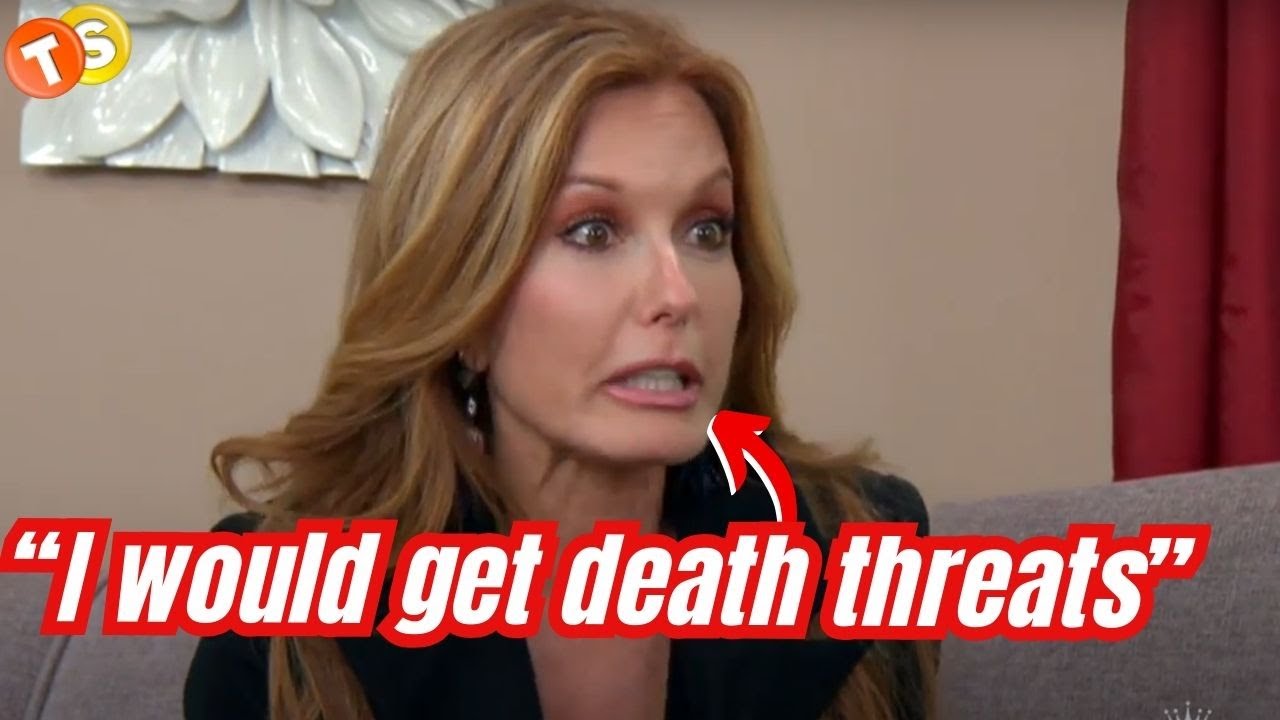
In a rare and candid revelation, Bregman has spoken about a chapter of her career that nearly shattered her sense of safety. While Lauren Fenmore remains beloved today, there was a time when the character was branded as Genoa City’s “queen of mean” — a role that earned Bregman not only attention and acclaim but also threats to her very life.
And for the first time, she’s lifting the curtain on what it was like to live in that dangerous intersection of art and obsession.
The Mean Girl of Genoa City
Today, Lauren is celebrated for her resilience, her sophisticated style, and her ability to navigate both love and corporate warfare. But longtime fans remember that when she first strutted into Genoa City in the 1980s, she wasn’t the trusted confidante she is now. She was the instigator — a bully whose razor-sharp tongue and relentless cruelty made her the scourge of more vulnerable characters.
Her primary target? Traci Abbott, portrayed by Emmy-winner Beth Maitland. Traci’s gentle spirit, coupled with her struggles with self-image, made her the perfect foil for Lauren’s venom. Their feud became one of the most talked-about rivalries in soap opera history — brutal, personal, and emotionally raw.
But what viewers didn’t realize was how agonizing those storylines were to lay.
Friends Offscreen, Foes Onscreen
In reality, Tracey Bregman and Beth Maitland shared a close, supportive friendship. Off set, they were confidantes. On set, however, the scripts forced Bregman to deliver lines that cut deep, attacking Traci’s weight and insecurities in ways that mirrored the worst kind of real-world cruelty.
“Some of those lines were so harsh, I could barely get them out,” Bregman admitted. “Beth was incredibly understanding — she knew I was just doing my job. But there were days when I went home with a pit in my stomach, wondering how far we were pushing it.”
The storyline was groundbreaking in its rawness, but it carried an unforeseen consequence: some fans couldn’t separate Tracey Bregman from Lauren Fenmore. And while soap fans are famous for their passion, that passion took a dark and dangerous turn.
She never reported her experiences to the producers at the time. Instead, she carried the burden silently, showing up on set day after day, delivering the lines, and weathering the storm outside the studio walls.
“It was a double-edged sword,” she reflected. “The role gave me everything — recognition, longevity, an audience that has stayed with me for decades. But it also came with moments that were truly frightening. That’s the part people don’t see.”
The Ripple Effect in Genoa City
Bregman’s confession also sheds new light on the enduring impact of Lauren and Traci’s rivalry. What started as a cruel, one-sided feud evolved over time into one of the most complex and layered relationships in Genoa City.
The writers eventually shifted Lauren from mean girl to multifaceted heroine, allowing her friendship with Traci to grow into something authentic and deeply moving. The characters who once tore each other down are now allies — a dynamic that mirrors the real-life bond between Bregman and Maitland.
That evolution wasn’t just good storytelling. It was necessary healing. And for fans who once loathed Lauren, it was proof that redemption — even for the most toxic of characters — is possible.
A Warning to Fans
Bregman’s story also serves as a cautionary tale about fandom. Soap operas thrive on passion; the very format depends on audiences caring deeply, loving ferociously, and hating with equal vigor. But when that passion crosses into reality, the consequences can be devastating.
“At the end of the day, there’s a real person behind every character,” she emphasized. “It’s important to remember that what you see onscreen is a performance. We tell these stories to entertain, to spark emotion — but they’re not real life.”
Her words echo a broader conversation happening in the entertainment industry about boundaries, safety, and the responsibility fans carry when engaging with performers.
Strength, Survival, and Legacy
Today, Tracey Bregman looks back on those turbulent times with both pain and gratitude. The ordeal shaped her, teaching her resilience and giving her a deeper appreciation for the longevity of her career.
It also underscores why Lauren Fenmore remains such a fascinating character. She’s flawed but strong, once the villain and now a survivor — a journey that mirrors, in some ways, Bregman’s own.
And perhaps that’s why fans, decades later, still tune in. Because in Genoa City, as in life, people evolve. Relationships change. Enemies can become allies, and the most ruthless characters can transform into heroes.